
The Future of Digital MarketingDigital Marketing Trends 2026
The digital world is evolving faster than ever before. Businesses today are no longer competing only on the quality of their products or services — they are competing on visibility, customer experience, trust, and online presence. In 2026, digital marketing has become one of the most important pillars of business growth, helping brands connect with audiences across multiple platforms in smarter and more personalized ways.
Whether you are a startup, a freelancer, a local business owner, or a large company, understanding modern digital marketing strategies is essential for long-term success. Businesses that adapt to changing customer behavior and emerging technologies are growing rapidly, while those ignoring digital transformation are struggling to stay relevant.
This blog explores the future of digital marketing, the latest trends shaping the industry, and the strategies businesses must adopt to remain competitive in 2026.
What Is Digital Marketing?
Digital marketing refers to the promotion of products, services, or brands through online channels such as:
- Search engines
- Social media platforms
- Websites
- Email marketing
- Mobile applications
- Online advertising
Unlike traditional marketing methods, digital marketing allows businesses to reach highly targeted audiences, track results in real time, and optimize campaigns for better performance.
The biggest strength of digital marketing is its ability to connect businesses directly with customers where they spend most of their time — online.
Why Digital Marketing Is More Important Than Ever
Consumer behavior has changed significantly over the last few years. Today, before purchasing any product or service, customers:
- Search on Google
- Read online reviews
- Compare brands
- Watch videos
- Check social media pages
- Ask for recommendations online
A business without a strong digital presence risks losing customers to competitors who are easier to find online.
Digital marketing offers several important benefits:
- Increased brand visibility
- Better customer targeting
- Higher engagement
- Cost-effective advertising
- Measurable performance
- Improved customer relationships
In 2026, digital marketing is no longer optional — it is essential for survival and growth.
The Rise of Artificial Intelligence in Marketing
Artificial Intelligence (AI) is transforming digital marketing in remarkable ways. Businesses now use AI-powered tools to automate tasks, analyze customer behavior, and create personalized experiences.
AI is helping marketers:
- Generate content faster
- Improve customer support with chatbots
- Automate email campaigns
- Predict customer behavior
- Optimize advertising performance
- Analyze large amounts of data
Tools like AI content generators and smart analytics platforms are saving businesses time while improving efficiency.
However, despite technological advancements, human creativity and emotional connection still remain extremely important. Customers value authenticity, trust, and genuine communication. The businesses that combine AI efficiency with human creativity will dominate the future.
Content Marketing Continues to Lead
Content remains one of the most powerful digital marketing strategies in 2026. Businesses that provide valuable, informative, and engaging content attract more traffic, build trust, and improve customer loyalty.
Content marketing includes:
- Blog posts
- Videos
- Podcasts
- Infographics
- Case studies
- Email newsletters
- Social media content
Modern customers do not want to feel like they are constantly being sold to. Instead, they prefer brands that educate, inform, and solve problems.
For example:
- A fitness brand can publish workout guides.
- A digital agency can share SEO tips.
- A finance company can create budgeting tutorials.
This approach builds authority and positions the brand as an expert in its industry.
SEO Is Becoming More User-Focused
Search Engine Optimization (SEO) is still one of the most important digital marketing channels. However, SEO in 2026 is far more advanced than simple keyword optimization.
Search engines now prioritize:
- Helpful content
- Website experience
- Mobile responsiveness
- Page loading speed
- User engagement
- Trustworthiness and expertise
Google’s algorithms are becoming smarter at identifying content that genuinely helps users.
Businesses should focus on:
- Writing high-quality content
- Using clear website structures
- Improving user experience
- Answering customer questions directly
- Building authority through valuable information
The future of SEO is about creating content for humans first and search engines second.
The Power of Short-Form Video Content
Video marketing has experienced massive growth in recent years, especially short-form content on platforms like:
- Instagram Reels
- YouTube Shorts
- TikTok
Modern users prefer fast, engaging, and visually appealing content. Businesses using short-form videos are achieving:
- Higher engagement
- Better brand awareness
- Increased website traffic
- Stronger audience connection
Short videos work well because they quickly capture attention in a crowded digital environment.
Effective video marketing strategies include:
- Educational tips
- Behind-the-scenes content
- Product demonstrations
- Customer testimonials
- Industry insights
Businesses do not need expensive equipment to succeed. Authenticity and consistency are often more important than high production quality.
Social Media Is Evolving Beyond Promotion
Social media is no longer just a place for posting advertisements. In 2026, successful brands use social platforms to:
- Build communities
- Interact with audiences
- Educate customers
- Share experiences
- Provide customer support
Customers now expect brands to communicate like humans rather than corporations.
Businesses that actively engage with followers through comments, polls, live sessions, and conversations often build stronger customer loyalty.
The focus has shifted from “selling” to “relationship building.”
Influencer Marketing Is Becoming More Authentic
Influencer marketing continues to grow, but the industry is changing. Audiences are becoming more selective and can easily identify overly promotional content.
As a result, businesses are moving toward:
- Micro-influencers
- Niche creators
- Long-term partnerships
- Authentic collaborations
Micro-influencers often have smaller audiences, but they usually maintain stronger trust and engagement with followers.
For businesses, influencer marketing works best when the collaboration feels natural and aligned with the brand’s values.
Personalized Marketing Is Driving Better Results
Modern consumers expect personalized experiences. Generic advertisements are becoming less effective because customers want brands to understand their preferences and needs.
Businesses now use customer data to deliver:
- Personalized emails
- Product recommendations
- Customized offers
- Targeted advertisements
For example, online shopping websites often recommend products based on previous searches or purchases.
Personalized marketing improves:
- Customer satisfaction
- Conversion rates
- Brand loyalty
- User engagement
However, businesses must also prioritize customer privacy and transparency when collecting data.
The Importance of First-Party Data
With increasing privacy regulations and restrictions on third-party cookies, businesses are focusing more on first-party data.
First-party data includes information collected directly from customers through:
- Website visits
- Email subscriptions
- Purchases
- Surveys
- Loyalty programs
This data helps businesses better understand customer behavior while maintaining stronger control over privacy and compliance.
Building direct relationships with customers is becoming one of the most valuable long-term marketing strategies.
Email Marketing Still Delivers Strong ROI
Despite the growth of social media and AI tools, email marketing remains one of the highest-performing digital marketing channels.
A strong email strategy helps businesses:
- Nurture leads
- Promote products
- Share updates
- Build customer relationships
- Increase repeat sales
Successful email marketing focuses on providing value rather than sending excessive promotional content.
Effective emails are:
- Personalized
- Relevant
- Clear
- Helpful
- Mobile-friendly
Businesses that consistently provide useful information through email continue to see strong engagement and conversions.
Local SEO Is Essential for Small Businesses
Local SEO is becoming increasingly important, especially for businesses targeting nearby customers.
When users search for:
- “Best café near me”
- “Digital marketing agency in Pune”
- “Nearby fitness center”
Search engines prioritize local businesses with optimized profiles and strong reviews.
To improve local SEO, businesses should:
- Optimize Google Business Profiles
- Encourage customer reviews
- Use local keywords
- Maintain accurate contact information
- Create location-specific content
Strong local visibility can significantly increase traffic and customer trust.
Data Analytics Is Shaping Smarter Decisions
One of the biggest advantages of digital marketing is measurable performance.
Businesses can track:
- Website traffic
- Conversion rates
- Audience demographics
- Engagement levels
- Advertising performance
This data allows marketers to understand what works and make smarter decisions.
Instead of relying on assumptions, businesses can optimize campaigns using real insights and customer behavior patterns.
Data-driven marketing leads to:
- Better ROI
- Improved targeting
- Reduced marketing waste
- Higher efficiency
Challenges Businesses Face in Digital Marketing
Although digital marketing offers many opportunities, businesses also face several challenges:
- Increasing competition
- Constant algorithm updates
- Content saturation
- Privacy regulations
- Rapid technology changes
Staying updated with trends and continuously learning is essential for long-term success.
Businesses that fail to adapt often lose visibility and customer trust.
The Future of Digital Marketing
The future of digital marketing will focus heavily on:
- AI automation
- Customer experience
- Personalization
- Community building
- Ethical marketing
- Interactive content
Consumers are becoming smarter and more selective about the brands they support. Businesses that prioritize transparency, authenticity, and value will continue to grow.
Marketing will become less about aggressive promotion and more about creating meaningful experiences.
Conclusion
Digital marketing in 2026 is smarter, faster, and more customer-focused than ever before. Businesses that understand modern consumer behavior and adapt to technological changes will gain a major competitive advantage.
Success in digital marketing is no longer about simply being online. It is about:
- Providing valuable content
- Building trust
- Understanding customer needs
- Creating personalized experiences
- Using technology strategically
Whether you are a startup, entrepreneur, freelancer, or established company, investing in digital marketing is one of the most powerful ways to achieve sustainable growth in the modern business world.
The future belongs to businesses that combine innovation with authenticity and focus on building real connections with their audience.
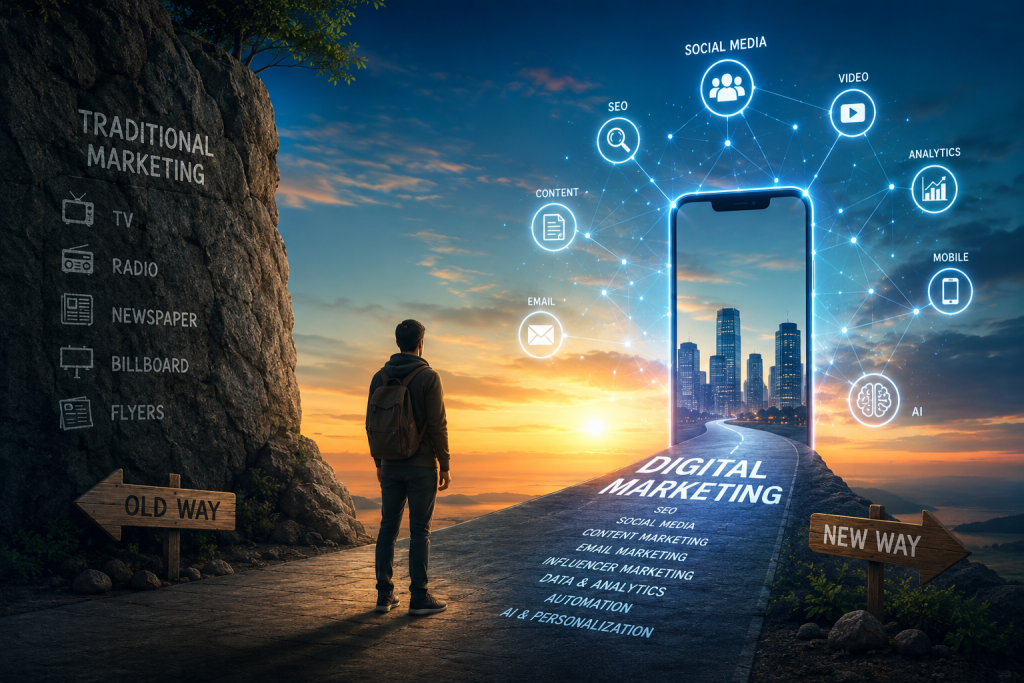
The future of digital marketing is transforming how businesses connect, engage, and grow in an increasingly digital world.
From AI-powered strategies to personalized customer experiences, modern marketing is shaping the next generation of business success.
Explore Our Website – Elivoraai